

On Writing Fiction Without the Bullshit
Write stories worth telling by mapping the personal onto the page

Putting the Personal on the Page
Writing fiction that resonates with readers requires drawing a little blood. You can craft gorgeous prose, perfect sentences—deliver clever turns of phrase that make you sigh at your own literary genius. But if it don’t make you feel anything when you write it, your reader ain’t gonna give a shit either. That means digging deep, peeling open old wounds, and remembering the times in your life when you felt what your character is feeling on the page, because you want your reader to feel that too.
Lately I’ve been chewing on how Shawn Coyne talks about “bullshit” stories in his essay The Lives We Dream and Do Not Realize1. He draws a hard line between mythic stories that are “truer than true” and the ones that only pretend to be. The mythic ones come from what he calls personal mapping—taking some universal situation and tying it back to an analogous experience in your own life. Without that mapping, no matter how well-crafted the book is, the story is inauthentic. It’s not mythic, not “truer than true”—it’s bullshit. 
I mentor writers in the Story Grid Writer Mentorship Program, and this is basically our north star. Story Grid is usually associated with structure—like the Five Commandments of Storytelling. That can make a story work, but it doesn’t make it worthy. Story Grid, as Shawn puts it, also refuses to teach bullshit generation; the whole mission is to empower and propagate authentic narrative truth instead of fake, non-lived performances. So when we’re working with writers, we’re not just tweaking scenes—we’re asking, “Where is your life in this? What have you actually suffered, lost, chosen, failed at, that you’re willing to map onto this character and situation?”
That hit me. I don’t want to spend years polishing a beautiful bullshit story. If I’m going to write monsters and magic, I want them anchored in something I’ve actually lived—especially when I’m aiming at one specific reader: the isolated, grieving teenager who thinks it’s safer not to need anyone. That means putting my own grief on the line.
Ever since reading those words late last year, I took a look at the cute historical YA fantasy/horror novel I drafted and let it consume my world. It was supposed to be a throwaway series about a teen girl fighting monsters—a notch in my belt, a portfolio prop—but I couldn’t let it be just that. Once I started putting myself in, it became The Call of Mammitum: a story about the dead, grief, and the people you share it with—or don’t.
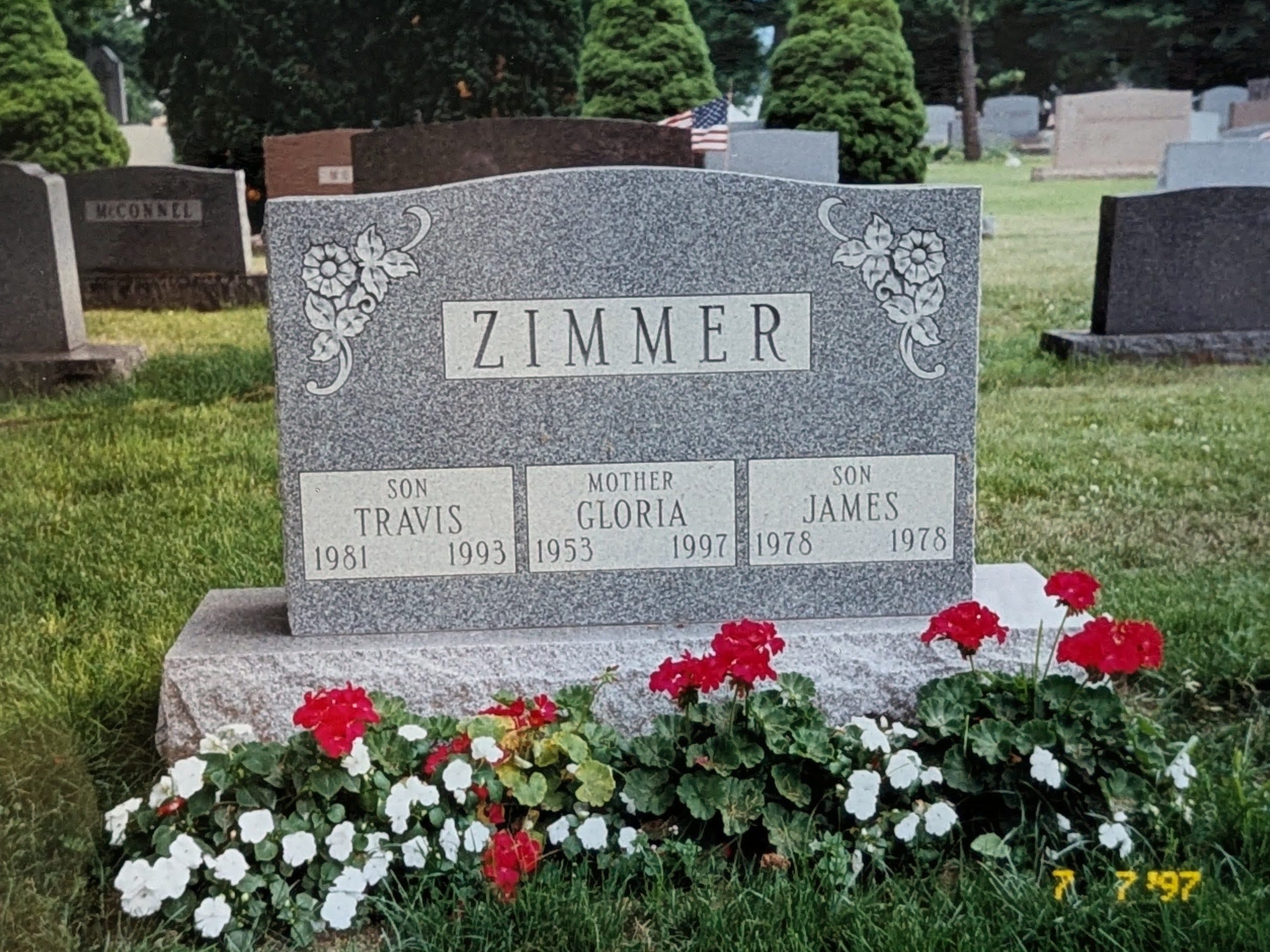
That’s what mapping the personal onto the story looks like for me: I lost a lot of people growing up, chief among them my younger brother, Travis, and my mother, Gloria. But their deaths simply capped the long-tail of struggles that essentially defined my childhood.
The Grief Behind the Story
Travis James
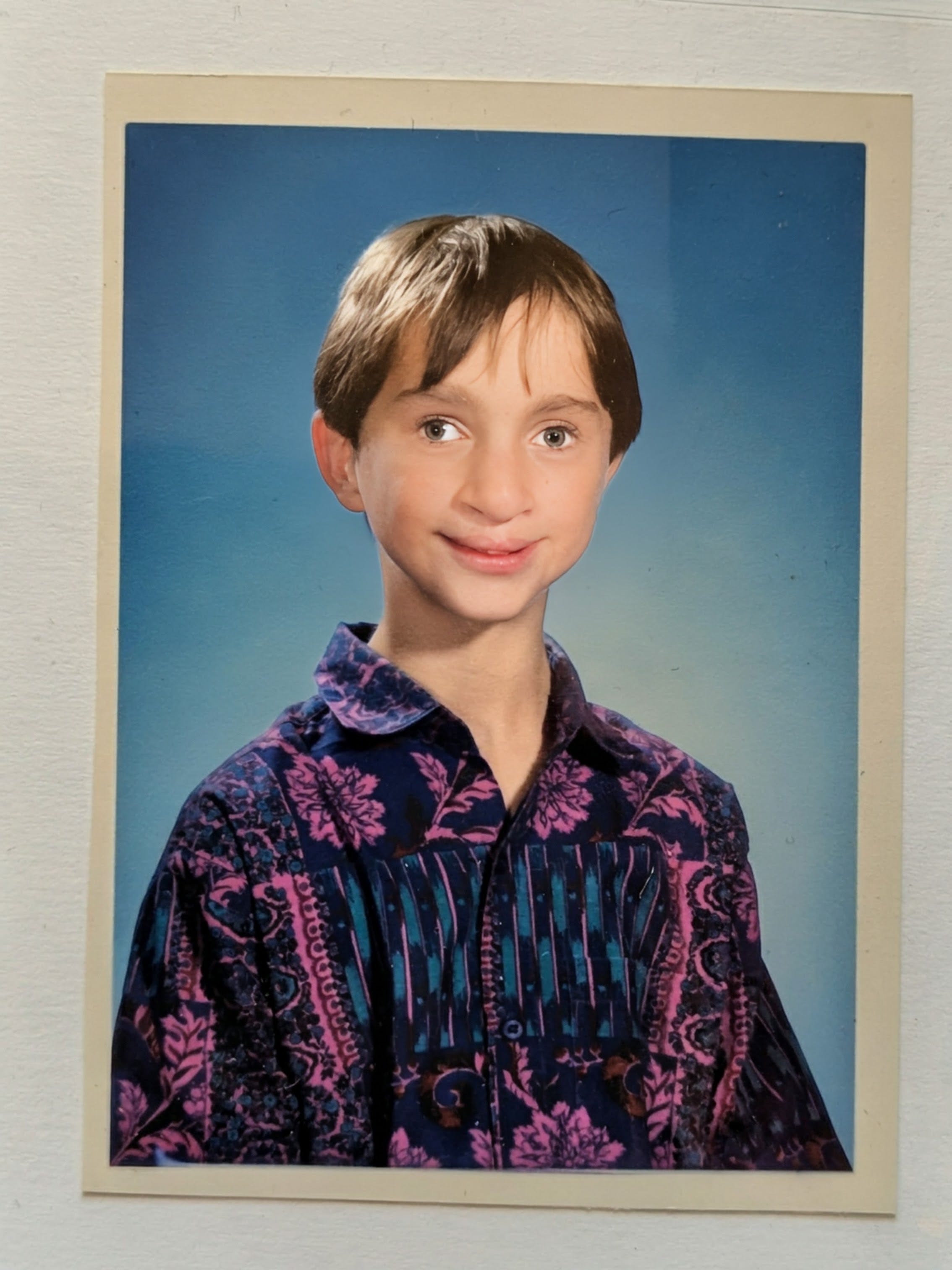
My brother was born with many defects—a cleft palate and a hole in his heart among them, leaving him with some facial deformities and a large scar down the center of his chest.
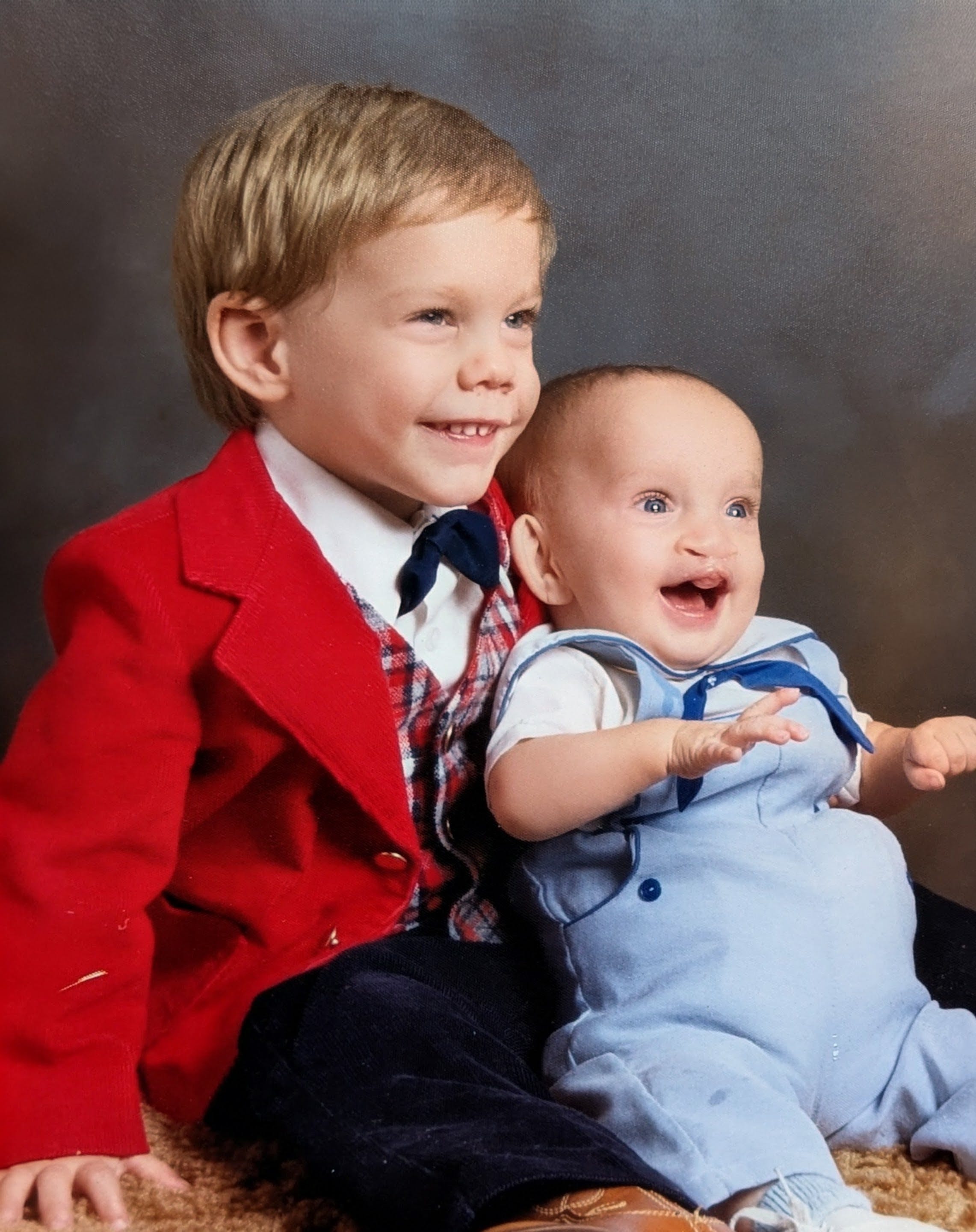
He was in and out of the hospital throughout his life, having about 26 different surgeries before he died at the age of twelve. And I wasn’t a great big brother—more of a bully really. I always had to have things my way, and one night I gave him shit about lasagna over eggrolls at the grocery store—always the stupidest things. He died the next day while hiking in the Mazatzal mountains along the Barnhardt trail. He probably shouldn’t have been up there, but he wanted to be—and the doctor said he’d be fine.
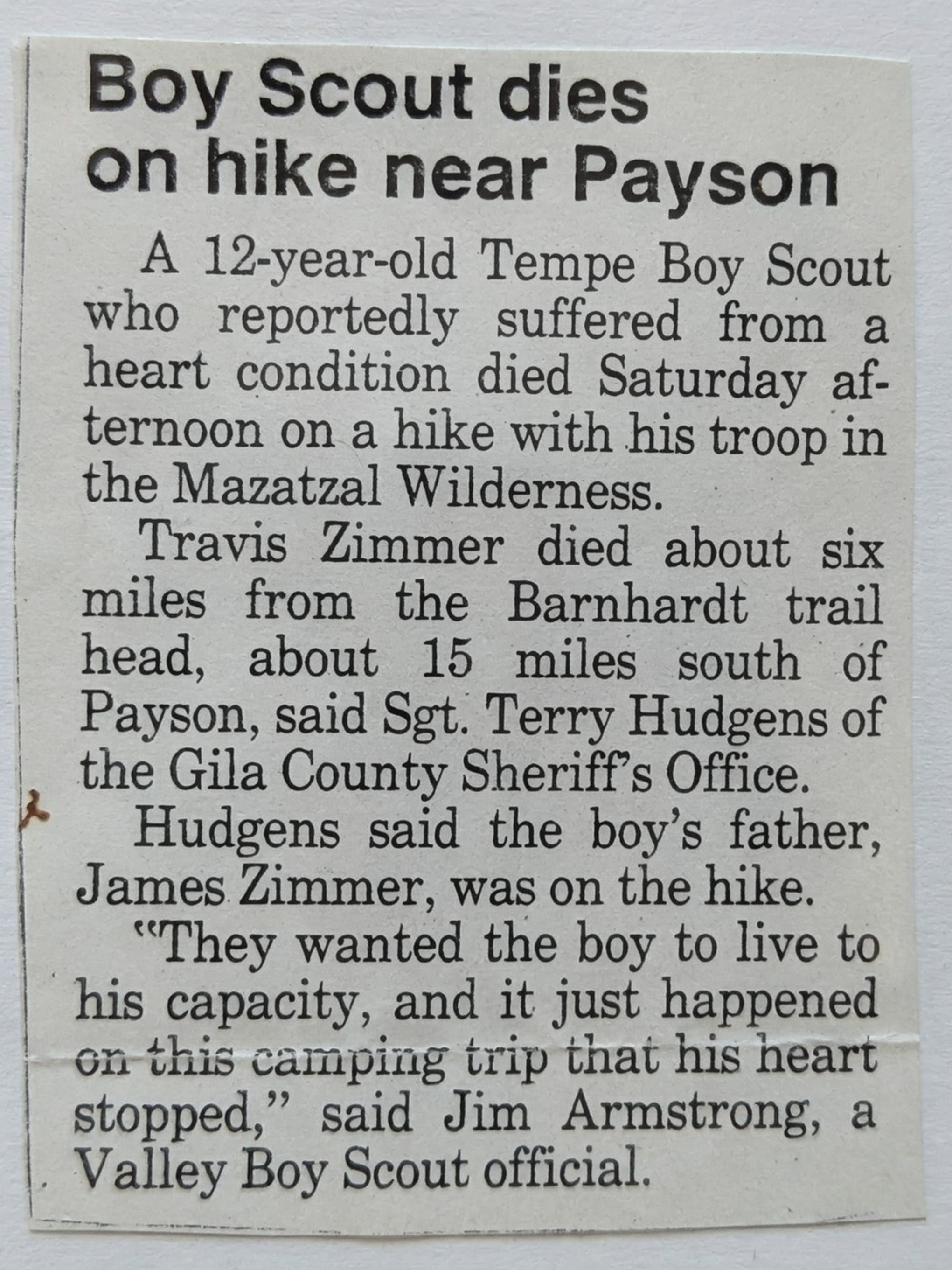
After setting up my tent at the campsite, I found myself in a circle of other Boy Scouts as our leaders informed us that some day hikers had passed a man with a young boy who’d died on the trail. Travis’d had a stroke—the elevation too high, the strain too much on his broken heart, my father’s attempt at CPR a failure.
We broke camp and hiked out. I went first—my pack lightened by others so I could speed on ahead. When I reached that spot on the side of the mountain, my father was sitting there, quiet. Beside him my brother lay zipped up in his sleeping bag. All I could see of him was his thin sandy hair, feathering out of the gap in the breeze. I stayed there with them. Silent. Until my father said, “What a beautiful place to die.” And then silent again.

It was. I still remember the shadows of clouds rolling over the foothills on that bright spring day. The troop hiked on by; men cried and gave condolences; the other boys stared at the ground as they passed. I took up drag position with the last group as my father waited on an air lift.
Mothers of the troop told my mother in person (some had lost their husbands one prior year to a kayaking accident, our troop no stranger to loss). That night, I slept on one couch, and my father the other. The next morning, he finally cried. “I want him back,” he wept as my mother held him—which let my feelings come. That was the first time I saw my father cry, so I cried too.
I want to take a breath here to remember those who took my pack to lighten my load, who comforted my mother, and who air lifted my father and brother off the side of a mountain when they weren’t supposed to do that if you’re already dead—rules broken in mercy. Mr. Rogers called them the helpers, and they belong in every story.
Gloria Mae
My mother was Type-I diabetic, onset at age twelve. My oldest daughter also went into DKA when she was twelve (and my youngest at 2). So the rest of this story whispers to me in cautionary tones.
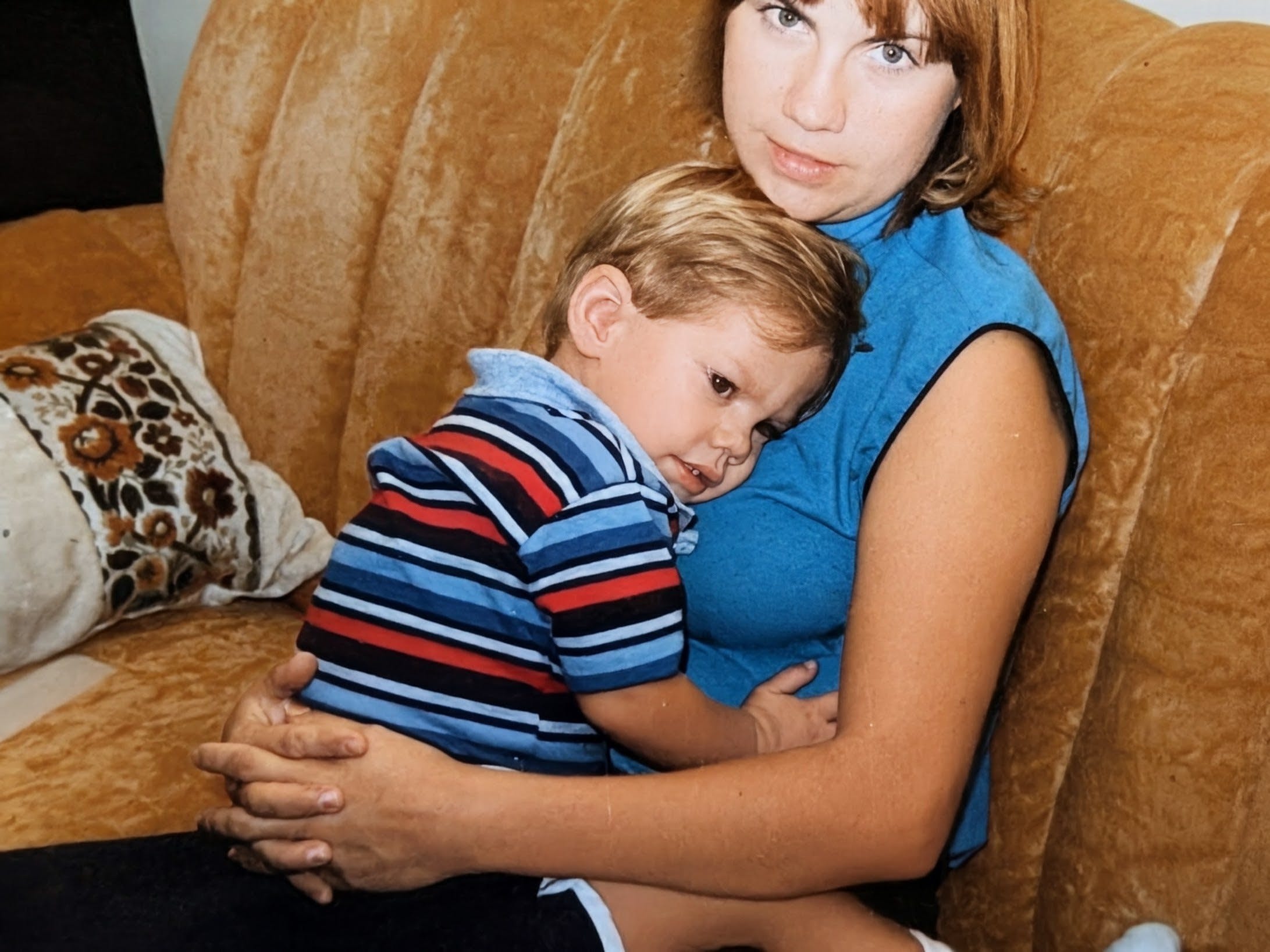
Her eyes went first: the retinas detached, and the stubborn, combative woman she was actually got kicked out of the laser treatment center. Things went south from there. Neuropathy prevented her from noticing the meat skewer jammed between her toes (Family Rule: No open toed shoes at the Renaissance Festival.) This led to infection which led to antibiotics which led to renal failure. My father left us then when I was fifteen2—the second time I saw him cry, as he begged me to hit him, punch him, give him my rage and blame. But I couldn’t. I can’t, it’s not in me to do so. My life was a fugue then. Maybe I dissociated. I still find it hard to grudge.
So I became my mother’s keeper. She couldn’t drive, so I drove her to doctors, dialysis, everywhere. I skipped school because she was too stubborn to call dial-a-ride (old school Uber for you young-folk) and would have driven herself regardless of being legally blind. But I wasn’t a good son. We clashed, and I raged, and I punched holes in things and slammed the door out of the frame and the frame out of the wall and called her a fucking whore and never apologized. Her tears still haunt me.
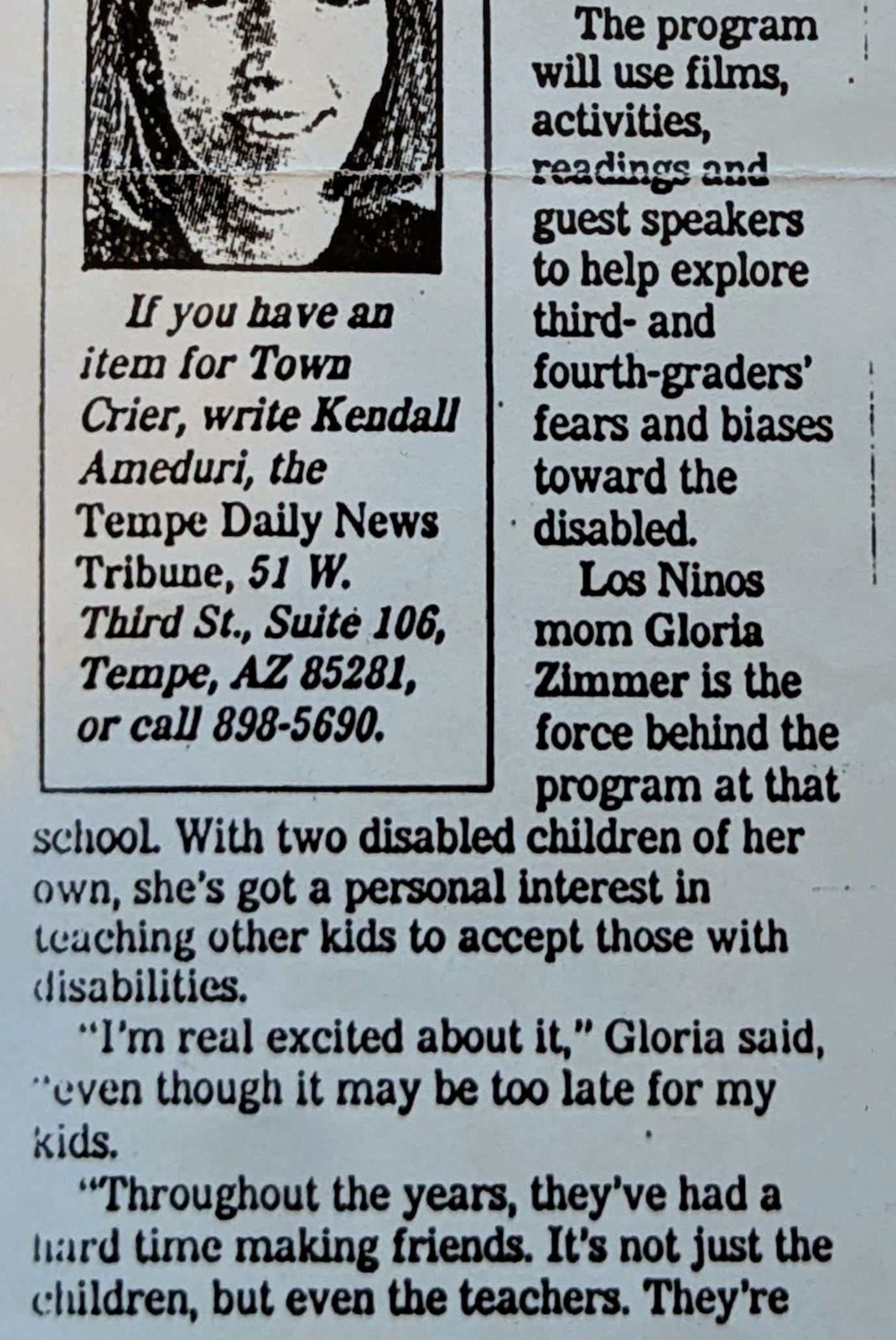
It was the liver that finally got her. See, it’s the falling apart that kills you even if you manage your diabetes well (which she didn’t). But I knew it was really over when I saw her spirit fail. I mentioned she was stubborn—she’d stand up to anybody with a righteousness that would send any “alpha” man cowering. She fought for two children with special needs (my youngest brother has cerebral palsy) and that became her thing, fighting for those children.
So, when a random infection turned her pinky finger shriveled and black and I raged about doctors ignoring it until it was too late, she just shrugged. They removed it and that was that. Surrender? Acceptance? I don’t know. We never talked about it. She coded at St. Luke’s hospital in Phoenix, Az in April 1997. I was taken to her room to say goodbye to her corpse with a tube still sticking out of her throat. Not her best look.
I’d rather die on the side of a mountain.
We buried her in Pennsylvania at the Beaver Cemetery. She lies there with her oldest son, James Micah (before I was born) and Travis James in a common plot. Her funeral was the third time I saw my father cry. It’s been almost 30 years and I don’t know if I’ll ever visit her grave—their grave—again.
This is the grief I’ve lived with for thirty-some-odd years—tucked into the tank, hidden behind the wall. When I sat down to write a story “just” about zombies, this is what came out instead.
Mattie Mae showed up first. And then I needed a villain, a shadow. We joke at Story Grid that, as authors, we’re the antagonists to our protagonists, so whatever parts of me inform Mattie, the rest inform the Shadow. I think that’s why he has green eyes.
Here’s a sample of what mapping my grief to this myth looks like.
On the Page: Mattie & Her Mother
I’ve been writing songs alongside the novel—Black and Red, Hey Sweetie, Today of All Days, In That Dark Door—to chase down the emotional cores of these scenes, to explore Mattie’s wounds.
Black and Red describes a dream about her father.

Hey Sweetie gets at how her brother, Marcus, left her behind to avenge their father.
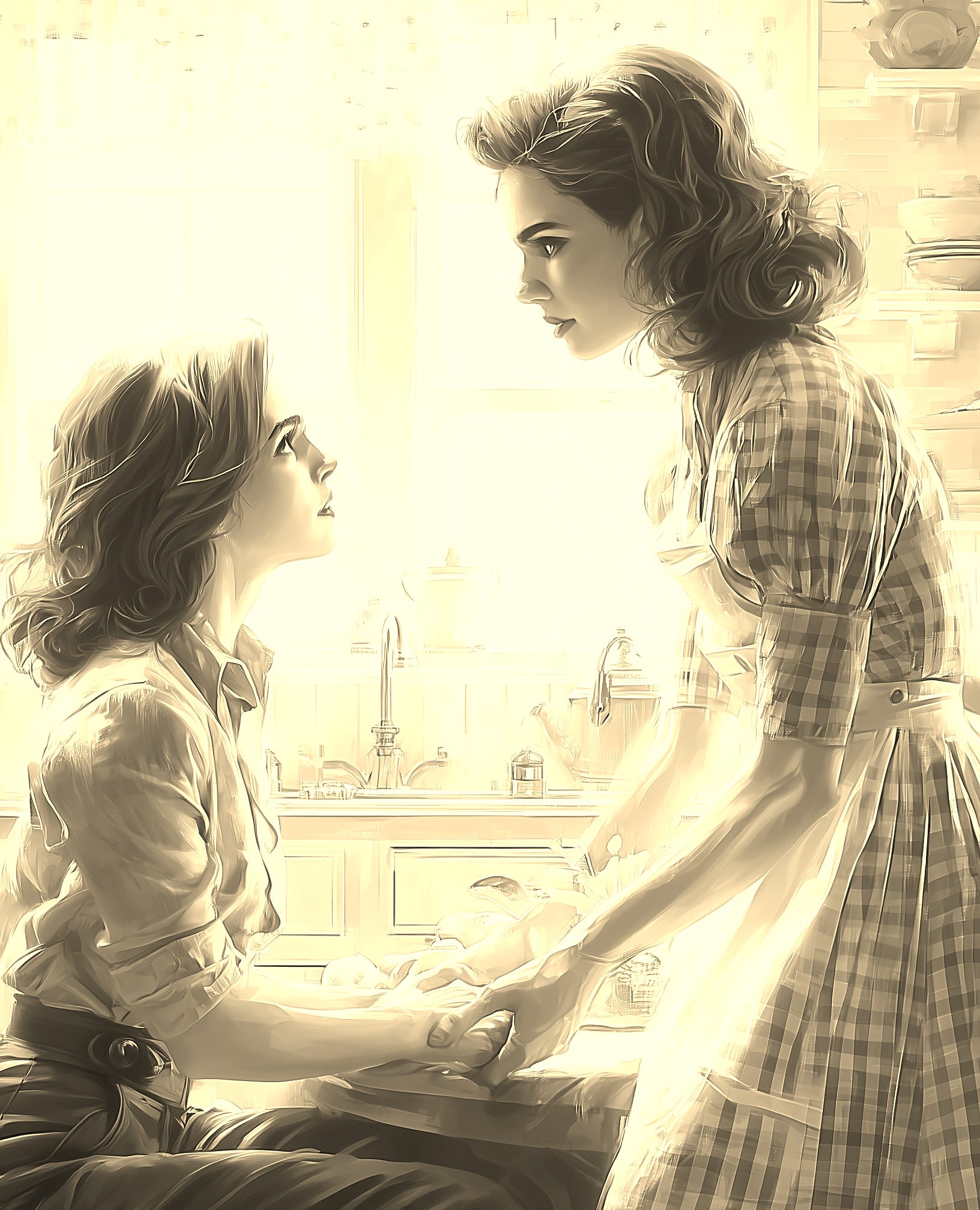
Now Mattie is struggling to cope with her overworked mother while taking care of her aging aunt. Their common grief is a major thread in the story. The Albright household has become a place of survival and quiet suffering:
We have a rule: never speak gravely of Death in this house. He lives with us—sits in the empty chairs, speaks in the gaps once filled by laughter. So we tease him. Pretend he’s no bother at all.
You can see that in the following excerpts. They’re mild spoilers, but not for the main plot, so I’ll risk it.
First up is the end of a really hard day full of ups and downs and whispers in the cemetery.
Monday’s End
The latch clicks, and I’m home—Mama’s at the sink, scrubbing dishes. My shoes clop on the wooden floor as I pass behind her to the table. Stew simmers in the Dutch oven on the stove; the lid jitters and hisses, steam curling out—rich with pepper and onion.
The smell grabs my stomach like a claw. It hits so hard I nearly double over, but I catch myself on the edge of the table and brace against the nearest chair.
Mama glances over her shoulder. “You’re back late.”
My neck tenses. But there’s a lilt in her voice and a glint in her eye, so I let my shoulders drop.
“I was at the library… studying for a paper—we got a new History teacher today.”
I sigh and hang my jacket over the chair. The rubbing slips out onto the floor. I snatch it, crumple it tight and shove it deep into my pants pocket.
“Really? Did you go there with anyone?” Mama asks.
My lips part, but my throat closes. How do I explain Tommy? She isn’t looking, and I let silence be my answer.
“No? Well, at least you’re being proactive. No use waiting until the last minute, right?”
I nod, but she doesn’t see that either.
“Stew’s ready. Just waiting on you.”
She sighs. “Last of the ham, so meals’ll be light this week—but the insurance check ought to hit the post soon. Then I’ll buy us a roast. What do you think?”
This time, she looks at me, and my mouth just hangs open.
The check. Marcus’s check—the payout from the policy he bought when he shipped out. The only reason we’re not on the street.
I forgot the day. Heat races up my face. Mama’s still watching.
A roast? Sure. I nod and try to smile.
“Okay then. I have to go,” she mutters. “Make sure your aunt eats something. She skipped lunch; wasn’t feeling well.”
I want to keep her here—just a little longer. I wanted to say something this morning, but we fought instead. And now the day is closing.
I want to remind her what day it is—to remember Marcus between us. I want to remember both of them.
But all I manage is, “I’ll get Aunt Millie to the table.”
She’s already pulling on her long coat, tightening the belt, and I let the moment slide. Mama doesn’t seem to remember the day it happened, only the day it hurt. Maybe we’ll talk then.
“Alright,” she says.
She walks toward me, heels knocking hollow on the floorboards. She stops and puts her hands on my shoulders—eyes on my eyes.
“Watch the ham—it’s the tough end—pick out the gristle for your aunt. I’ll see you in the morning.”
She kisses my cheek and leaves me standing with all my words stuck in my throat. Now the kitchen is empty.
Steam curls from the Dutch oven—ham in my nostrils, rumble-and-tug in my belly. But I don’t budge.
I should’ve said something; she could’ve stayed; I could’ve come home sooner.
We could’ve remembered. Together.
Today, of all days.
Today of All Days gets at the crux of this conflict.

The next excerpt is part of the resolution. Mattie overcame so much in the week leading up to this moment but there’s still something left to do—probably the hardest yet.
Aftermath
“Oh, thank you again, Nellie.” Mama says, hands clasped out front like she does for company. “It was so nice having you. Can you see Nellie out, please, Mattie love?”
We step outside together. The air is damp with dew and smoke from the chimney hangs low.
As soon as the door clacks shut behind us, I don’t hold back. “Why doesn’t she remember? Why doesn’t anyone remember? The whole town’s acting like it was just a windy night.”
She hems, eyes to the ground. “Maybe that’s the nature of magic, Mattie. Or maybe it’s just people. We don’t like remembering what we can’t explain. So we weave a simpler story—one we can live with.”
She glances up and cocks her head to the door. “Your mother remembers the wind, and remembers you out studying with friends. That’s a story that makes sense. It fits her pride—her joy at seeing you find a passion.”
She leans back and squints. “A night full of magic and the dead walking? That just doesn’t fit.”
“But it’s true!” I squeak.
She jabs a finger at me. “It is. And you know it—so do your friends. That’s who you share it with. Your mother? She’s here. She’s safe. You made that happen. Is magic what you really want to talk to her about? You’ve got her now, all to yourself. What do you want to say?”
She taps down with her cane and takes a step. “Time doesn’t wait for those who hesitate. You know that better than most.”
I nod as Nellie trundles off and turn back to the door, fighting down the ache building in my chest.
I step inside.
Mama’s at the table, hands wrapped around a chipped mug, staring into the steam.
I sit across from her, and she looks up long enough to give me a small smile before dropping her gaze back to the mug. She sips.
I pick at my thumbnail, smoothing out the jagged edge, even and dull. Twice I glance at her; twice I open my mouth. Twice I close it.
The scrape of her chair startles me. She’s standing, turning away.
Oh! I can’t share the magic with her, but I can share them. I got to say goodbye tonight. She didn’t. So I grab her hand as she takes her cup, and stop her.
She freezes and we look at each other a moment.
Her eyes soften. “Are you okay, Mattie love? I was going to clean up.”
I shake my head. “Can you sit?” My voice comes out small. “Can we talk?”
She sits back down, and nods.
“Mama…” My throat tightens and my eyes blur. “Monday…”
I breathe, and she waits.
“Monday was the anniversary of—”
“I know,” she says.
I look up. Her eyes are already turning pink.
“Why didn’t you say anything?” I whisper.
“Mattie… I see how hard things are for you. Every day. Why do you think I get so frustrated? It’s not you. It’s this—this world you’re up against. And I’m the one who has to push you through it. I didn’t want to add that weight—that reminder—”
“But I want to remember!” I whine. “I want to remember them with you. You don’t have to protect me, not from that. It feels… lonely.”
I swallow, breathe and blink at the ceiling. “We’re two halves of the same pain, Mama. We should feel it together. Like Auntie says—we take care of each other. Well, all you do is take care of me. Let me give it back.”
She lays her other hand over mine, and nods.
“Okay,” she says. “What do you want me to say, then?”
“I want to know what you’d tell them. If they were here. Right now. All of it, even the bad.”
I swallow again. “And I’ll tell you what I told them… in the cemetery.”
She closes her eyes, breathes deep, and squeezes my hand.
“Okay,” she says. “You give me a minute now. It’s a lot.”
In That Dark Door covers what she told them in the cemetery.

This chain of events alters the house rule slightly in the epilogue:
We still don’t speak gravely of Death. He’s still there in the empty spaces, but our dead live here too, in the spaces between us; in our laughter, where Death has no place; and in our memories—so long as we live.
No Bullshit
This no-bullshit idea won’t leave me alone. It’s changed how I look at everything I write.
And that’s why I’m putting this much of myself into The Call of Mammitum. I’m not writing a spooky little monster romp. I’m writing the fifteen-year-old version of me who watched his brother’s body airlifted off a mountain. I’m writing the kid who couldn’t hit his father when he begged him to, but could scream vile things at his dying mother and never apologize. I’m writing the house where nobody knew how to talk about the dead, so the grief rotted in the walls. And I’m writing the green-eyed man, the monster in the shadows—the villain who took the wrong path and bottled it all up inside.
But I’m also the father of teens suffering from anxiety and school refusal, of autistic girls who struggle to find connection and maintain friendships—things I recognize in myself. I need to be more than what I tell myself I am so that they can be everything they want to be.
This story is about more than grief—but grief is the core.
The zombies, the incantations, the stone door to the underworld—those are just the angle I need so I can look at that grief without going blind. The magic lets me tell the truth slant. As Nellie says, magic isn’t really what Mattie wants to talk about.
I don’t write to prove I can turn a pretty phrase or to chase preorders. Coyne calls those ‘shadow desires’—the ego stuff that pulls writers toward performance and away from truth. I’m writing this for one specific reader3: the anxious, grieving teenager who’s decided it’s safer not to need anyone. My job is to let Mattie model a different choice—that sharing grief with the living hurts like hell, but it’s better than being alone with the dead.
If Mammitum works, it won’t be because the prose is gorgeous or the horror is inventive. It’ll be because some reader sees their own pain in Mattie’s and realizes, even for a heartbeat, Oh. It’s not just me. Maybe they’ll walk into the kitchen and say, “Can we talk about him? About her? About what happened?”
That’s the bar I’m holding myself to, because, as Mammitum says4:
“I call the desperate because they seek change, and will endure what others cannot. The path is difficult. Ascent is not a ladder, but a cycle of falling and rising, of loss and return. As the ocean breathes, as the moon circles, so shall you stumble—and find footing again.”
No bullshit. Just shared grief, shaped into a story that might help somebody else stay. If you’re a writer, the question I’d leave you with is simple: where are your dead, and are they on the page yet?5
Otherwise, I publish my science fiction serial here: The Girl with the Cybernetic Eye
Shawn Coyne, The Lives We Dream and Do Not Realize: The Story Grid Mission Statement (Story Grid Universe, LLC, 2024).
Funny Story: So, I’m watching TV and I look out the back sliding glass door and see patio furniture flying across the yard. My first assumption is that she finally pissed the old man off enough to start throwing shit, but when I got up to the glass, my father was sitting quietly in a chair while my mother—with a damaged foot and limited sight and mobility mind you—is throwing shit all over the yard. She came running into the house screaming, “Your father’s leaving me!” Way to make it all about you, mom.
What we call SAM, or Specific Audience Member, but that’s a focusing tool—specificity breeds universality as they say.
My fictional version, at least. Mami, Mammi, Mammitum, Mamitu, Ninhursag, Nintu, Belet-ili, etc said lots of different things, few of which are actually very useful in this context.
This doesn’t mean everything you write has to come from the deepest, darkest corner of your psyche, but when you write an emotion, think about a time in your life that you experienced it, the stakes that were involved, and put it in there.
Just.....stunned.
Thanks for sharing this. Illustrates your point exactly - how can any person who has a sliver of compassion not get drawn into your personal story and therefore your fiction?
Thanks also for articulating what we're trying to do as mentors at Story Grid, JZ...
Wow. What a powerful thing to tap into for your fiction. Thank you for sharing yourself with us.